
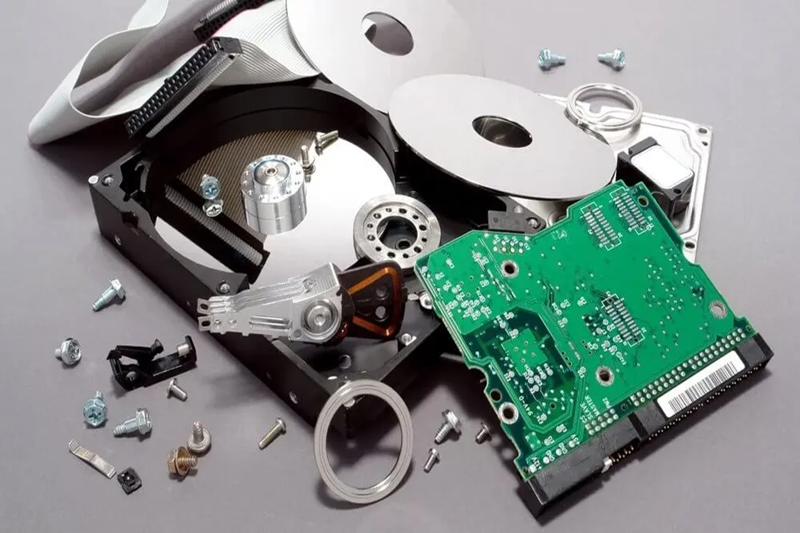

A professional hard drive disposal service ensures that storage devices containing sensitive information are decommissioned in a way that eliminates the risk of unauthorised data recovery. For organisations of all sizes, retiring hard drives and other storage media is a critical data governance responsibility that cannot be addressed through simple file deletion or standard formatting alone.
Improper disposal exposes organisations to regulatory penalties, financial losses, operational disruption, and reputational damage. These risks are entirely avoidable when disposal is managed by a qualified and certified provider.
The Risks of Improper Hard Drive Disposal
Studies of second-hand hard drives have repeatedly shown that many devices sold or discarded without professional sanitisation still contain recoverable data. Recovered information has included:
- Personal records
- Financial information
- Medical data
- Login credentials
- Confidential business documents
For organisations operating under Singapore’s Personal Data Protection Act (PDPA), exposing personal data through improperly disposed storage media may constitute a reportable data breach, potentially leading to regulatory investigations and enforcement action.
The risk does not arise only from deliberate negligence. In many cases, data exposure results from:
- Inadequate internal disposal procedures
- Employee oversight
- Incomplete IT asset tracking
- Reliance on basic formatting or deletion methods that do not permanently erase data
- Once a drive leaves organisational control with data still intact, recovery by unauthorised parties becomes possible.
- What a Professional Disposal Service Provides
A qualified hard drive disposal provider manages the full decommissioning lifecycle through documented and secure processes, including:
Secure collection
Equipment is collected from client premises under a documented chain-of-custody process, ensuring accountability from pickup through final disposal.
- Inventory verification
Each storage device is logged, labelled, and assigned a unique reference number before processing. - Certified data sanitisation or destruction
Drives are either securely overwritten using recognised standards such as NIST 800-88, or physically destroyed through shredding or degaussing where software wiping is unsuitable. - Destruction certification
Clients receive certificates documenting the sanitisation method, processing date, and technician responsible for the disposal. - Environmentally responsible recycling
Destroyed components are processed through certified e-waste recycling channels in compliance with Singapore’s e-waste management regulations.
Choosing Between Data Wiping and Physical Destruction
The appropriate disposal method depends on several factors, including the sensitivity of the stored data, the condition of the drive, and whether the hardware retains any residual value.
Software-based wiping is generally suitable for operational drives containing moderately sensitive information. Certified overwriting methods permanently erase data while preserving the hardware for reuse or resale.
Physical destruction is recommended for drives containing highly confidential information, damaged devices, or encrypted drives where encryption keys are unavailable. Shredding or degaussing provides the highest level of assurance that data cannot be recovered.
As Lee Hsien Loong observed, “In a digital world, protecting data is protecting people.” That responsibility extends beyond active system use to the final stage of a device’s lifecycle.
Regulatory Considerations in Singapore
Singapore’s Personal Data Protection Commission (PDPC) has made clear that organisations remain responsible for personal data throughout its entire lifecycle, including disposal. The PDPC has taken enforcement action against organisations that failed to secure personal data during IT asset disposal processes, highlighting the importance of compliant decommissioning practices.
Additional industry-specific obligations may also apply. Financial institutions regulated by the Monetary Authority of Singapore, for example, are subject to stricter data handling and disposal requirements beyond baseline PDPA obligations.
Building a Secure Disposal Process
Organisations that regularly retire storage media should implement a formal disposal policy that defines:
- Collection procedures
- Asset tracking requirements
- Approved sanitisation methods
- Verification and certification standards
- Vendor accountability measures
This process should be regularly reviewed and updated to reflect evolving technologies, regulatory expectations, and operational risks.
Partnering with a qualified hard drive disposal provider gives organisations the technical expertise, compliance assurance, and documented audit trail needed to manage data disposal securely and confidently.
