

Key Highlights
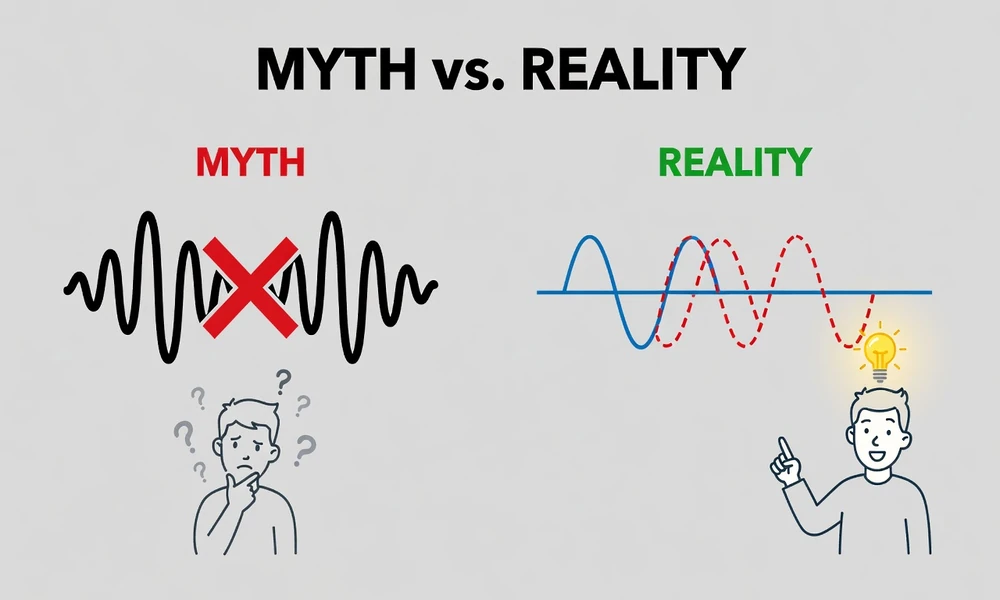
- Active noise cancellation does not eliminate all sounds equally but focuses on consistent low-frequency noises.
- Modern noise-cancelling technology no longer compromises high-fidelity sound quality like earlier versions did.
- Using noise-cancelling features does not necessarily drain your battery as quickly as many people assume.
- Noise cancellation is not inherently “dangerous” for your hearing and can actually help prevent volume-related damage.
Introduction
As active noise cancellation (ANC) has become a standard feature in high-end audio gear, several misconceptions have begun to circulate among consumers. Many people hesitate to invest in noise-cancelling headphones in Singapore because they believe these devices will block out every single sound or that the technology will somehow ruin the music’s original quality. Understanding the science behind how these headphones work is essential for making an informed purchase. Far from being a gimmick, ANC is a sophisticated engineering feat that serves a specific purpose. By debunking these common myths, we can better appreciate how this technology improves our listening experiences and why it has become so popular in noisy urban environments.
Myth 1: They Block Out All Noise Completely
One of the most persistent myths is that noise-cancelling headphones will create a state of absolute silence, even in a crowded room. In reality, ANC is most effective against low-frequency, repetitive sounds like the hum of an air conditioner or the roar of a jet engine. It is significantly less effective at blocking out sudden, high-frequency noises like a baby crying or a colleague’s sharp laughter. This is because the technology relies on “anti-noise” waves that must be calculated in milliseconds; predictable sounds are easier to counter than erratic ones. When looking for noise-cancelling headphones in Singapore, it is important to manage your expectations: they will significantly quiet the world around you, but they won’t make you completely deaf to your surroundings.
Myth 2: Noise Cancellation Ruins Sound Quality
In the early days of ANC, the process of generating anti-noise could sometimes introduce a slight “hiss” or compress the dynamic range of the music. However, modern digital signal processors have largely eliminated this issue. Premium models now use separate circuits for audio playback and noise cancellation, ensuring that the music remains crisp and detailed even when the ANC is turned on. In many cases, noise cancellation actually improves perceived sound quality. Because you are not competing with background noise, you can hear subtle details in your music that would otherwise be lost. Audiophiles now frequently use noise-cancelling headphones in Singapore to enjoy high-fidelity audio in environments that would normally be too loud for traditional headphones.
Myth 3: The Battery Will Die Almost Instantly
There is a common fear that engaging noise-cancelling features will drastically shorten the lifespan of your headphones’ battery. While it is true that the microphones and processors required for ANC do consume power, modern battery technology has made huge strides. Most contemporary wireless headphones offer 20 to 30 hours of continuous playback with ANC enabled, which is more than enough for several days of heavy use. Some models even feature “intelligent” power management that adjusts the level of cancellation based on your environment to save energy. The trade-off between the slight power consumption and the massive benefit of a quieter environment is one that most users find incredibly favourable.
Myth 4: They Are Bad for Your Ear Health
Some people believe that the “pressure” they feel when turning on ANC is harmful to their eardrums. This sensation is actually just your brain reacting to the sudden lack of low-frequency sound, which it perceives as a change in atmospheric pressure. In reality, noise-cancelling headphones can be much better for your ear health than standard ones. Because they block out external noise, users feel less inclined to turn their music up to dangerously high levels to compensate for their surroundings. By allowing you to listen at lower volumes in loud places, noise-cancelling headphones in Singapore actually help protect you from long-term noise-induced hearing loss, making them a safer choice for daily commuters.
Conclusion
By clearing away these common myths, it becomes clear that noise-cancelling technology is a highly beneficial tool for modern living. It offers a way to reclaim focus and protect your hearing in an increasingly loud world without sacrificing audio fidelity or battery life. Whether you are a frequent traveller, a busy professional, or simply someone who enjoys their music in peace, understanding the reality of ANC allows you to use your equipment more effectively. As the technology continues to evolve, these devices will only become more integrated into our daily lives, providing a sanctuary of sound wherever we go.
Don’t let myths stop you from enjoying a superior audio experience. Discover the true power of noise-cancelling headphones in Singapore by trying them out for yourself. Contact One Futureworld to find a pair that offers the perfect balance of silence and sound quality.
