
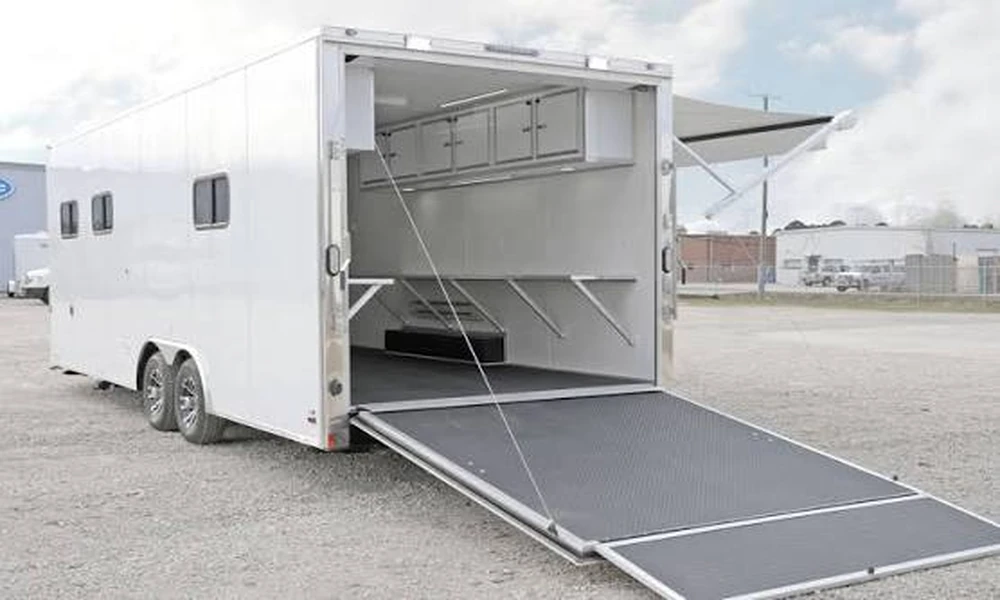

Mobile operations trailers are becoming increasingly popular as mobile offices and workspaces for teams that require mobility and coordination of workstations. These units are intended to meet the needs of the field and can be used to assist emergency response operations, public safety, event operations, infrastructure work, and more. Several factors can impact their effectiveness.
To build a truly effective command hub, applying core Designing Mobile Operations Trailers Insights during the initial planning phase helps organizations tailor these custom units to high-stakes environments. Balancing rapid deployment with robust operational infrastructure ensures field teams maintain continuous situational awareness, whether responding to a remote emergency or managing large-scale operations. Evaluating these foundational considerations guarantees that the mobile unit remains highly adaptable, efficient, and resilient under any field conditions.
Operational Purpose
The first issue to be taken into account is the purpose for which the trailer will be used. The layouts, technologies, and equipment levels vary from one operation to another. The primary purpose should be clearly stated to prevent the organisation from incorporating unproductive features, while making sure the tasks that people need to do can be conducted using the trailer.
Interior Layout
The internal layout should facilitate effective working and communication. Workstations, displays, storage spaces, communications and collaboration spaces should be arranged in an orderly fashion. A proper layout may assist in the speed of information access for teams and utilise space efficiently.
Connectivity and Communication
To coordinate in the field, reliable communication is needed. Cellular and radio systems, satellite communications, Internet connectivity, or other technologies may be required in mobile trailers, depending on the operation. Use multiple communications in various settings for increased flexibility.
Power Requirements
The power of the trailer needs to be adequate for the equipment and systems aboard. Computers, displays, networks, communications equipment and other technology can add up to a big energy load. Additionally, backup power solutions can be used to ensure continuity both in the event of an outage and for remote operations.
Environmental Conditions
Mobile operations trailers can be used in extreme environments such as hot, cold, wet, or otherwise difficult conditions. To maintain protection of personnel and equipment, insulation, climate control, ventilation and weatherproof construction are important. If there is a long-term use period in front of the trailer, environmental planning is important.
Technology Integration
Technology should be useful as it enhances coordination and should not be complicated. Data systems, mapping tools, video displays, communication equipment and more should be easily accessible and easy to use. The design should also be able to be upgraded in the future.
Mobility and Deployment
A mobile trailer needs to be transportable and easily erected. The following should be considered: the size and weight, towing requirements, stabilisation, access and deployment time. Time is crucial, and efficiency can help get operations up and running faster.
Durability and Security
The trailer and its contents should be kept secure from physical damage, inclement weather and unauthorised use. Long-term reliability can be achieved through appropriate protective systems, controlled entry, secure storage and durable materials.
Conclusion:
Intelligently designing a mobile operations trailer for better field coordination demands a balance of technology, mobility, comfort and operational utility. These factors, along with the need for space, connectivity, power, environment, security and future requirements, should be taken into account when developing mobile workspaces to ensure better communication and decision-making in the field.
