
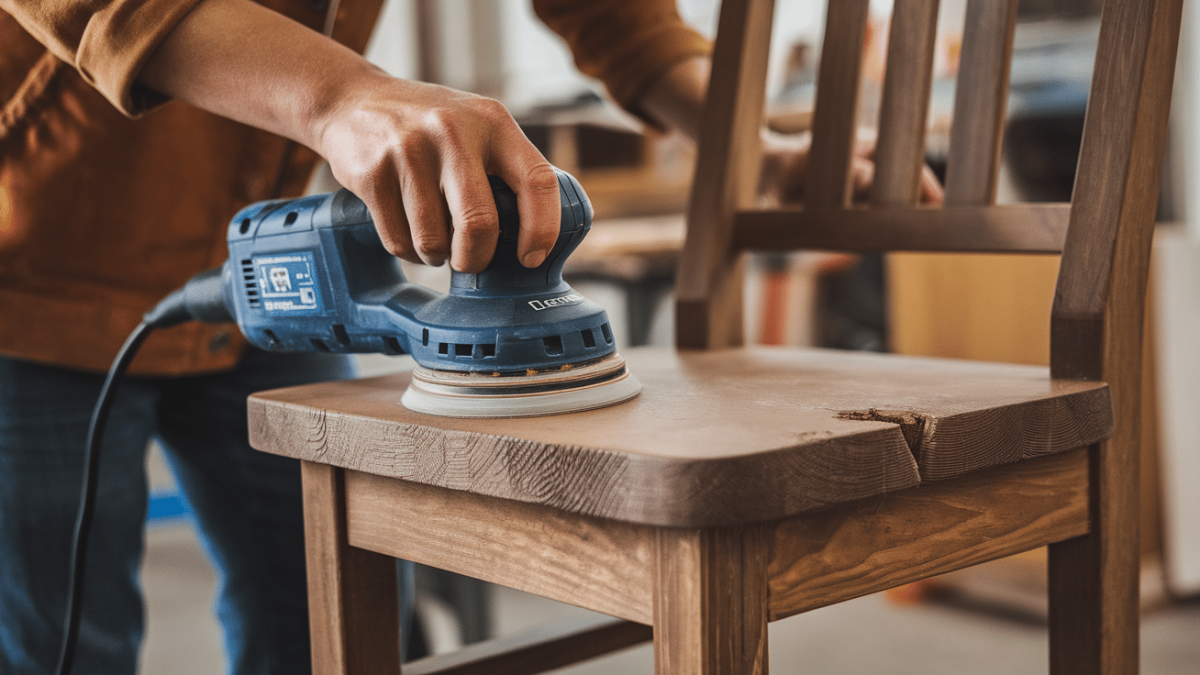

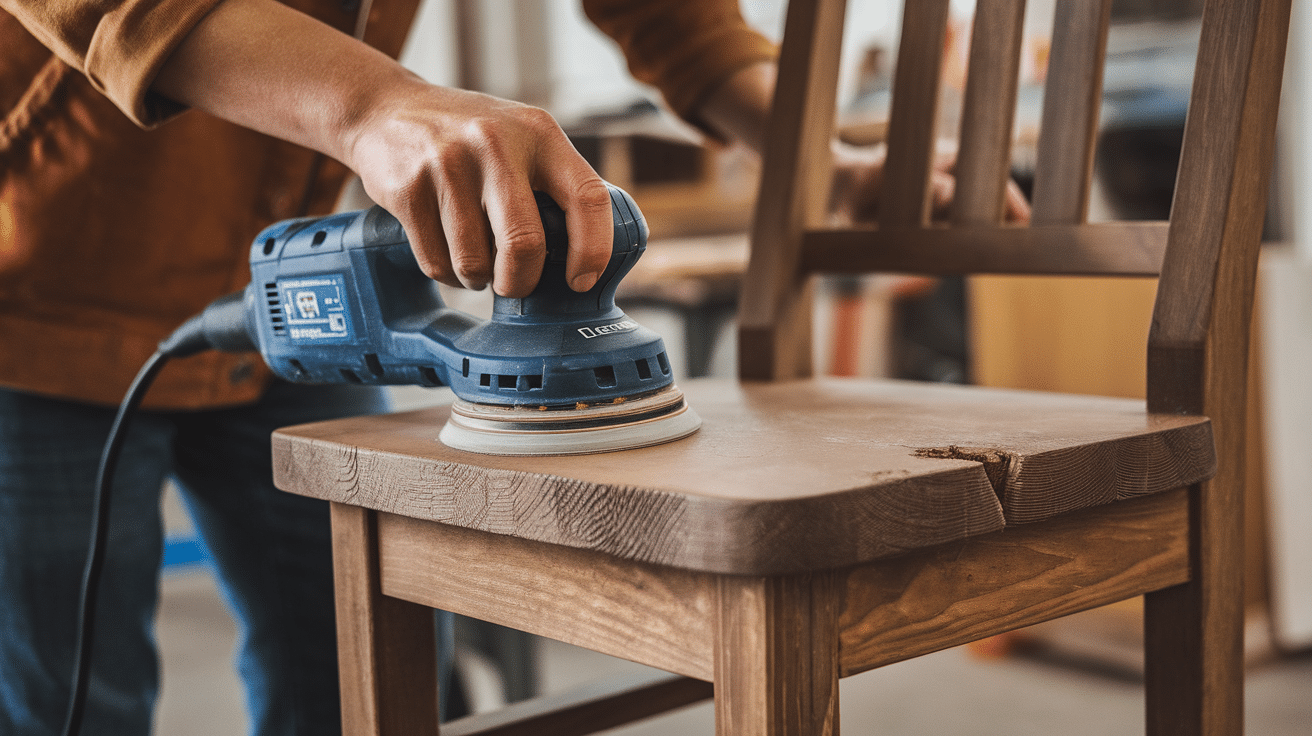
Furniture restoration is one of those craft activities that rewards patience and the right tools in roughly equal measure. The stripping of old finish, the repair of damaged surfaces, the reshaping of worn profiles, and the final preparation for a new finish application all involve sanding work of different types — and the detail sanding component is consistently the part that makes or breaks the final result.
Flat surfaces are relatively forgiving. A random orbit sander removes old finish efficiently and leaves a surface ready for finishing with straightforward technique. The detail areas — the curved rails, the carved decoration, the joints between components, the turned leg profiles — these are where the work slows down and where inadequate tools produce results that look obviously unfinished even after the project is otherwise complete.
The Detail Sanding Challenge in Furniture Work
Old furniture, particularly pieces worth restoring, tends to have exactly the profiles and construction features that make detail sanding most important and most demanding. Chair backs with multiple spindles and curved crest rails. Cabinets with applied mouldings around panel faces. Tables with carved aprons or decorative leg profiles. Each of these features requires getting abrasive into areas that no flat pad tool can effectively reach.
Hand sanding remains the fallback for many restorers, but it is slow, produces uneven results across repeated spindles or mouldings, and is genuinely fatiguing during any substantial project. A HoZo detail sander like the HOZO NeoSander brings speed and consistency to this work that hand sanding simply cannot match — particularly important when a piece involves many identical or near-identical detail areas that need to look consistent in the final finish.
Preparing Surfaces for Different Finish Types
The final grit used before applying a finish affects how that finish looks and how it performs. Oil finishes penetrate more deeply into wood prepared to a lower grit. Film finishes like lacquer and polyurethane show surface scratches less when applied over a finer preparation. Understanding the interaction between surface preparation and the chosen finish type helps select the right abrasive progression for each project.
The NeoSander Premium Combo includes abrasive options that cover the typical progression — from the initial removal passes at coarser grits through to the fine preparation needed before applying finishing products. Having these options immediately available means the work can progress through the full sequence without stopping to source additional supplies.
Working Around Existing Hardware and Fittings
Furniture restoration frequently involves working around hinges, drawer pulls, lock escutcheons, and other hardware that either cannot be removed or that is more efficiently worked around than removed and replaced. The pointed profile of a detail sander’s triangular pad is specifically suited to getting into the areas immediately adjacent to hardware where a larger tool would inevitably contact the fitting itself.
The same principle applies to areas where two components meet at a tight angle — the inside corner between a chair seat and its supporting rail, or the junction between a cabinet door frame member and its panel. A powered detail tool reaches these areas consistently and produces results that are genuinely difficult to replicate with folded sandpaper and manual effort.
Managing Different Wood Species in Restoration
Furniture restoration work encounters a wide range of wood species, each with different hardness, grain characteristics, and response to sanding. Softer species like pine and poplar remove material quickly at any given grit, while harder species like oak, maple, and walnut require more motor power to achieve equivalent material removal rates. A detail sander with consistent motor performance under varying material hardness handles this variety without requiring technique adjustment for each species encountered.
The Investment in Quality for Serious Restoration Work
For occasional light restoration projects, a basic detail sander may be adequate. For anyone who does restoration work regularly — whether professionally or as a serious hobby — the difference between a capable tool and an inadequate one is felt immediately and accumulates across every project. The motor that maintains consistent speed, the vibration level that allows extended use without fatigue, the pad system that accommodates different profiles — these characteristics define whether a detail sander is a genuine workshop asset or a source of frustration.
